
The open road is calling, promising adventure and discovery. But let’s be honest: standing at the rental counter, deciphering acronyms like CDW and LDW while worrying about hidden fees, can feel more like a roadblock than a highway. The excitement for your trip can quickly fade when you’re overwhelmed by choices and fear unexpected charges on your final bill. What if you could approach the entire car rental process with total confidence, knowing you’ve found the best deal on the perfect ride?
This is your ultimate guide to making that happen. Forget the confusion and stress. We’ll walk you through everything you need to know, from choosing the right vehicle for your journey to understanding insurance options and uncovering exclusive prices. By the end, you’ll be empowered to book with certainty, avoid surprises, and ensure a smooth, simple process from pickup to drop-off. It’s time to save your money for the adventure itself. Let’s get you in the driver’s seat.
Understanding Car Rentals: The What, Why, and Who
A car rental service allows you to hire a vehicle for a specific period, from a few hours to several weeks. It’s a straightforward concept that unlocks incredible freedom, flexibility, and convenience for any traveler. By putting you in the driver’s seat, a rental car transforms your trip from a fixed itinerary into a journey of discovery. For a deeper dive into the industry’s structure, this Car rental overview provides a comprehensive look at its business models and history.
Why Rent a Car for Your Next Trip?
Whether you’re planning an epic cross-country road trip, need a reliable vehicle for business, or simply want a seamless transition from the airport, a car rental offers unparalleled autonomy. Unlike ride-sharing services, you control the schedule and can make unlimited stops without watching the meter run. And unlike public transit, you have the power to explore hidden gems and off-the-beaten-path destinations that tour buses never reach. Discover your destination on your own terms.
Key Terminology You Need to Know
Navigating a rental agreement is simple once you know the language. Here are the essential terms to understand before you book:
- CDW/LDW (Collision/Loss Damage Waiver): An optional waiver that covers your financial responsibility for damage to or theft of the rental vehicle.
- Liability Insurance: Coverage for damages to other people’s property or injuries to others if you cause an accident. Basic coverage is often included, but supplemental options are available.
- One-Way Rental: The convenience of picking up a car in one city and dropping it off in another. This service typically includes an additional fee.
- Additional Driver Fee: A daily charge required to authorize another person to drive the rental car.
- Mileage Limits: A cap on how many miles you can drive. Exceeding the limit results in per-mile fees. Always look for deals with unlimited mileage for maximum freedom.
Major Rental Companies vs. Aggregators
The market is dominated by well-known brands like Hertz, Avis, Enterprise, and Budget. You can book directly on their websites, but a smarter approach is often to use an aggregator. An aggregator, or comparison site, scans multiple rental companies at once to find the best rates and options for your specific dates. A tool like Hoteltra empowers you to compare exclusive prices in one simple search, ensuring you find the best overall value without the hassle of checking dozens of sites. Save time, save money, and book your perfect ride with confidence.
How to Rent a Car: A Step-by-Step Guide
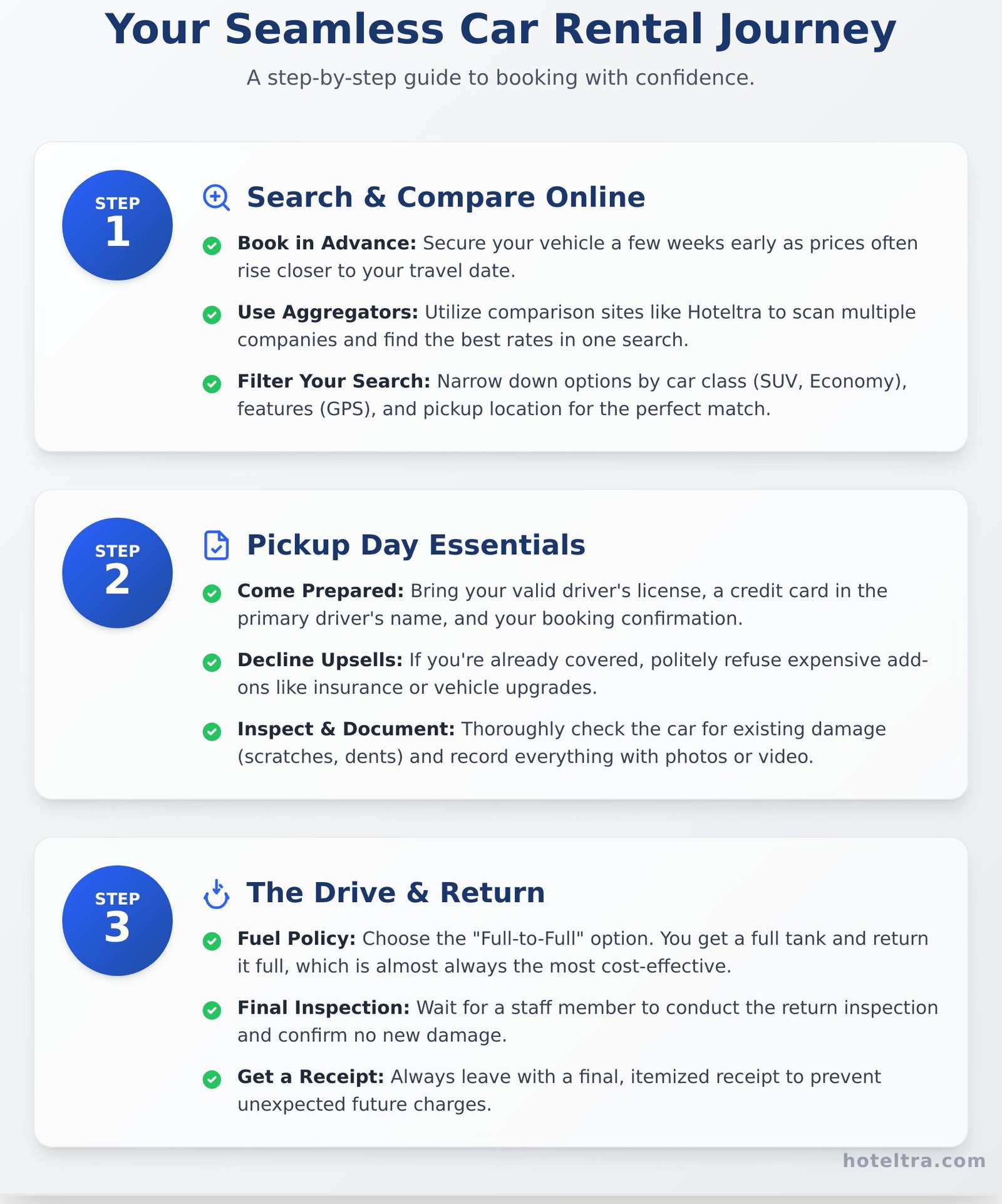
Unlock your road trip adventure with a seamless car rental experience. From finding the best price to returning the keys, this guide simplifies the entire process into three clear stages. Follow these steps to save money, avoid stress, and get on the road faster.
Step 1: Searching and Comparing Deals Online
The key to a great deal is booking in advance. Prices often rise closer to the travel date, so secure your vehicle at least a few weeks early. Use comparison tools to filter by car type (e.g., SUV, economy), essential features like automatic transmission or GPS, and convenient pickup locations. Finding the right vehicle at the lowest price is the first step to a perfect trip. Compare exclusive car rental deals on Hoteltra now!
Step 2: At the Rental Counter: Pickup Day
Arrive prepared to make your pickup quick and efficient. You will need three key items:
- A valid driver’s license for every driver.
- A credit card in the primary driver’s name.
- Your booking confirmation number (digital or printed).
Agents may try to upsell you on insurance or vehicle upgrades. If you are already covered, politely decline. Before you leave the lot, inspect the car thoroughly for any existing damage—scratches, dents, or interior stains. Document everything with photos or video on your phone. Understanding your agreement is crucial; for more tips, review the official FTC consumer advice on car rentals to avoid common pitfalls.
Step 3: During Your Rental and The Return Process
If you have a breakdown or accident, call the rental agency’s 24/7 roadside assistance number immediately. For fuel, the “full-to-full” policy is almost always the most cost-effective option—you receive the car with a full tank and return it full. Pre-paying for fuel is convenient but typically more expensive. When returning the vehicle, a staff member will conduct a final inspection. Wait for them to confirm there is no new damage and always get a final, itemized receipt before you leave.
Choosing the Perfect Vehicle for Your Trip
Your adventure starts with the right set of wheels. Selecting the perfect vehicle for your car rental isn’t just about getting from A to B—it’s about matching your ride to your road trip. Balance your budget, comfort needs, and itinerary to discover the best value and unlock a seamless travel experience.
Car Classes Explained: From Economy to Luxury
Rental companies categorize vehicles to simplify your choice. Here’s a quick breakdown to help you compare options:
- Economy & Compact: Perfect for solo travelers or couples on a city break. They are easy to park, excellent on gas, and the most budget-friendly choice.
- Sedans & SUVs: Ideal for family vacations or trips with more luggage. Sedans offer a comfortable ride for highways, while SUVs provide extra space and capability for varied terrain.
- Luxury, Sports Cars & Vans: For special occasions, scenic drives, or large groups. Choose a luxury car for ultimate comfort, a sports car for a thrilling experience, or a passenger van when traveling with a crowd.
| Car Class | Best For | Price Guide | Fuel Efficiency |
|---|---|---|---|
| Economy/Compact | City trips, 1-2 people | $ | Excellent |
| Sedan | Families, business travel | $$ | Good |
| SUV | Group travel, all-weather | $$$ | Fair |
| Luxury/Specialty | Special occasions, comfort | $$$$ | Varies |
How to Choose Based on Your Destination
Let your destination guide your decision. A smart choice makes any trip smoother.
- Mountain or Winter Trips: An SUV with all-wheel or four-wheel drive offers superior traction and safety.
- European Cities: A compact car makes navigating narrow cobblestone streets and finding parking simple.
- Coastal Drives: A convertible adds an unforgettable, open-air element to scenic routes like the Pacific Coast Highway.
Essential Extras: Do You Need GPS, Toll Passes, or Child Seats?
Add-ons offer convenience but can quickly inflate your total car rental cost. Before you click “add,” consider the alternatives. Your smartphone’s map app is often more up-to-date than a rental GPS unit. For child seats, bringing your own can save significant fees, but always check airline baggage policies first. Understanding the full cost of these extras is crucial; the FTC consumer advice on car rentals provides a great overview of how to spot hidden fees. Always weigh the rental company’s price against the convenience to ensure you’re getting the best deal for your journey.
Decoding Car Rental Costs: How to Avoid Hidden Fees
The thrill of a new adventure can quickly fade when you’re hit with unexpected charges on your final car rental bill. The price you booked isn’t always the price you pay. But with a little know-how, you can take control, avoid surprises, and keep more money for your travels. Let’s break down the costs so you can book with confidence.
Understanding Rental Car Insurance
The insurance options at the rental counter can be confusing. The most common are the Collision Damage Waiver (CDW) or Loss Damage Waiver (LDW), which cover theft or damage to the rental vehicle. Before you say yes, check your existing coverage. Many personal auto insurance policies and premium credit cards already offer protection for rentals. A quick call to your provider before you travel can save you a significant amount of money.
Common Fees and How to Dodge Them
Extra charges can add up fast. Watch out for these common fees and learn how to sidestep them for a better deal on your next car rental:
- Young Driver Surcharge: Drivers under 25 almost always pay a daily fee. There’s no way around this, but be sure to factor it into your budget when comparing prices.
- Airport Fees: Picking up your car at the airport is convenient but often includes a “concession recovery fee.” Compare prices at off-site locations, as a short taxi ride could lead to big savings.
- Prepaid Fuel: This option is rarely a good value. You pay for a full tank upfront, with no refund for unused gas. Save money by declining this and refilling the tank yourself just before you return the car.
- Late Return Fees: Returning the car even an hour late can sometimes result in being charged for an entire extra day. Know your return time and stick to it.
Tolls and Tickets: Who Pays?
Rental companies offer electronic toll passes for convenience, but they come with daily service charges on top of the actual tolls. If possible, bring your own transponder or plan a route that allows you to pay tolls with cash. If you get a parking or speeding ticket, the rental agency will be notified. They’ll pay the fine and then bill your credit card, adding a steep administrative fee for the trouble. The best advice? Drive safely and park legally.
Now you’re ready to book like a pro. Find your perfect ride and discover exclusive prices for your next trip at hoteltra.com.
Hit the Road: Your Perfect Car Rental is a Click Away
You’re now fully equipped to navigate the world of car rentals with confidence. This guide has shown you that the process is simple when you know what to look for. Remember, the key takeaways are choosing the right vehicle to match your travel style and decoding the costs to avoid surprises. Mastering these steps ensures your car rental experience is not just affordable, but completely stress-free from pickup to drop-off.
The open road is calling, and your next adventure is waiting. Hoteltra makes it easy to get behind the wheel. In a single search, you can compare exclusive deals from trusted brands like Hertz, Avis, and Budget, ensuring you get the best price. For ultimate convenience, you can manage your entire trip by booking flights, hotels, and cars all in one place. Don’t wait to make your travel dreams a reality. Ready for your adventure? Compare car rental prices and book now!
Your next unforgettable journey starts here.
Frequently Asked Questions
How old do you have to be to rent a car?
In most countries, including the U.S., you must be 25 years old to rent a car without extra fees. Many companies allow drivers aged 21-24 to rent but will apply a daily “young driver surcharge,” which can significantly increase your cost. Always confirm the specific age policy with the rental company before booking your vehicle. Some luxury or specialty cars may have even higher age restrictions, so it’s always best to check ahead.
Do I need a credit card to rent a car, or can I use a debit card?
A credit card is the standard requirement for renting a car. Companies place a temporary hold on your card for the security deposit, a process that is much simpler with a credit line. While some locations accept debit cards, they often impose stricter rules. You may face a credit check, need to provide proof of a return flight, or be required to pay a larger deposit. Using a credit card is the most straightforward way to secure your rental.
Can I rent a car with an international driver’s license?
Yes, you can typically rent a car with a valid driver’s license from your home country. You should also carry your passport as a secondary form of identification. If your license is not in the Roman alphabet (like English), you will most likely need an International Driving Permit (IDP) to serve as an official translation. The IDP must be presented with your original license. Always verify the specific requirements for the country you’re visiting before you travel.
What is the best way to save money on a car rental?
Unlock the best value on your car rental by planning ahead. Book your vehicle well in advance, especially during peak travel seasons, to secure lower rates. Use a comparison tool to see prices from multiple suppliers at once. You can also save money by picking up your car from an off-airport location to avoid extra fees. Finally, check if your personal auto insurance or credit card provides rental coverage so you can confidently decline the expensive counter add-ons.
Is it cheaper to rent a car at the airport or off-site?
Renting a car off-site is almost always cheaper than renting directly at the airport. Airport locations add convenience fees and premium location surcharges to the base price, which can significantly inflate your bill. Taking a short, free shuttle or a quick taxi ride to a nearby neighborhood branch can result in substantial savings. Weigh the convenience against the cost to discover the best deal for your trip and compare both options when you search.
What should I do if I get into an accident with a rental car?
If you have an accident, your first priority is safety. Check for injuries and call for medical help if needed. Next, contact the police to file an official report, which is crucial for any insurance claims. Then, call the 24/7 roadside assistance number provided by the rental company—it is usually on the keychain or in the glovebox. Be sure to take photos of the damage and exchange contact and insurance information with any other drivers involved.